
Libertex vs eToro 2026: Which Is Right for You?
Cost-focused CFD trading vs social investing - we break down which broker fits your style and goals.
Libertex
4.4/5

eToro
4.5/5


Libertex vs eToro: At a Glance
The Libertex vs eToro 2026 debate really comes down to one core question: do you want to trade CFDs with tight, transparent costs, or do you want a social investing experience where you can copy other traders while also buying real stocks?
Libertex, founded in 1997, is built for active CFD traders. It offers zero spreads on all markets, charges a small commission per trade, and gives you access to 374 instruments including forex, commodities, and indices. The minimum deposit is $100.
eToro, launched in 2007, takes a completely different approach. It pioneered copy trading and social investing, lets you buy real stocks and ETFs with zero commission, and covers a much wider universe of 4,245 assets. You can get started with just $50.
For a beginner who wants to learn by watching and copying experienced traders, eToro is genuinely hard to beat. But if you're ready to trade CFDs actively and want your costs as low as possible, Libertex's commission model will likely save you real money over time. Both platforms are beginner-friendly. The right choice depends entirely on how you plan to trade.
Libertex vs eToro: Side-by-Side Comparison
| Broker | Rating | Min Deposit | Best For | Regulation | EUR/USD Spread | Gold Spread | Withdrawal Fee | Inactivity Fee | Copy Trading | Real Stocks | Total Assets | Demo Account | Platforms |
|---|---|---|---|---|---|---|---|---|---|---|---|---|---|
| Libertex | 4.4 | $100 | Active CFD traders seeking low costs | CySEC | 0-1.2 pips | 25 pips | Up to 1-2% | €10/month after 180 days | No | No (CFDs only) | 374 | Yes (unlimited) | Proprietary, MT4/MT5 |
| eToro | 4.5 | $50 | Social trading and real stock investing | FCA, CySEC, ASIC, SEC | 1 pip | 45 pips | $5 flat | $10/month after 12 months | Yes | Yes (2,000+ stocks/ETFs) | 4,245 | Yes (unlimited) | Proprietary web and app |

Regulation and Safety: How Protected Are You?
This is one area where the two brokers are genuinely different, and it matters more than most people think.
eToro holds a stronger regulatory profile overall. It's licensed by the FCA in the UK, CySEC in Cyprus (with EU passporting), ASIC in Australia, and is registered with the SEC and FINRA for US operations. That's two top-tier regulators plus several others, meaning eToro clients in most major markets benefit from serious investor protections including segregated client funds, negative balance protection, and in some regions, compensation schemes like the UK's FSCS (up to £85,000) or Cyprus's ICF (up to €20,000).
Libertex operates primarily under a CySEC license in Cyprus. That's a legitimate and respected regulator within the EU, and CySEC membership means EU clients do get negative balance protection and access to the ICF compensation scheme. However, Libertex has fewer top-tier licenses than eToro, so if you're based in the UK or Australia, you'll want to verify exactly which entity you're opening an account with and what protections apply to your specific region.
What This Means for Global Traders
For most global traders, both brokers are considered safe and regulated. That said, if regulatory breadth is your top priority, eToro's multi-jurisdictional licensing gives it an edge. If you're an EU-based trader, both brokers offer comparable CySEC protections.
One practical tip: always check which specific entity you're registering with. Global brokers often operate multiple entities, and your protections depend on which one handles your account. Both brokers are transparent about this in their terms.
Platform and Tools: Two Very Different Philosophies
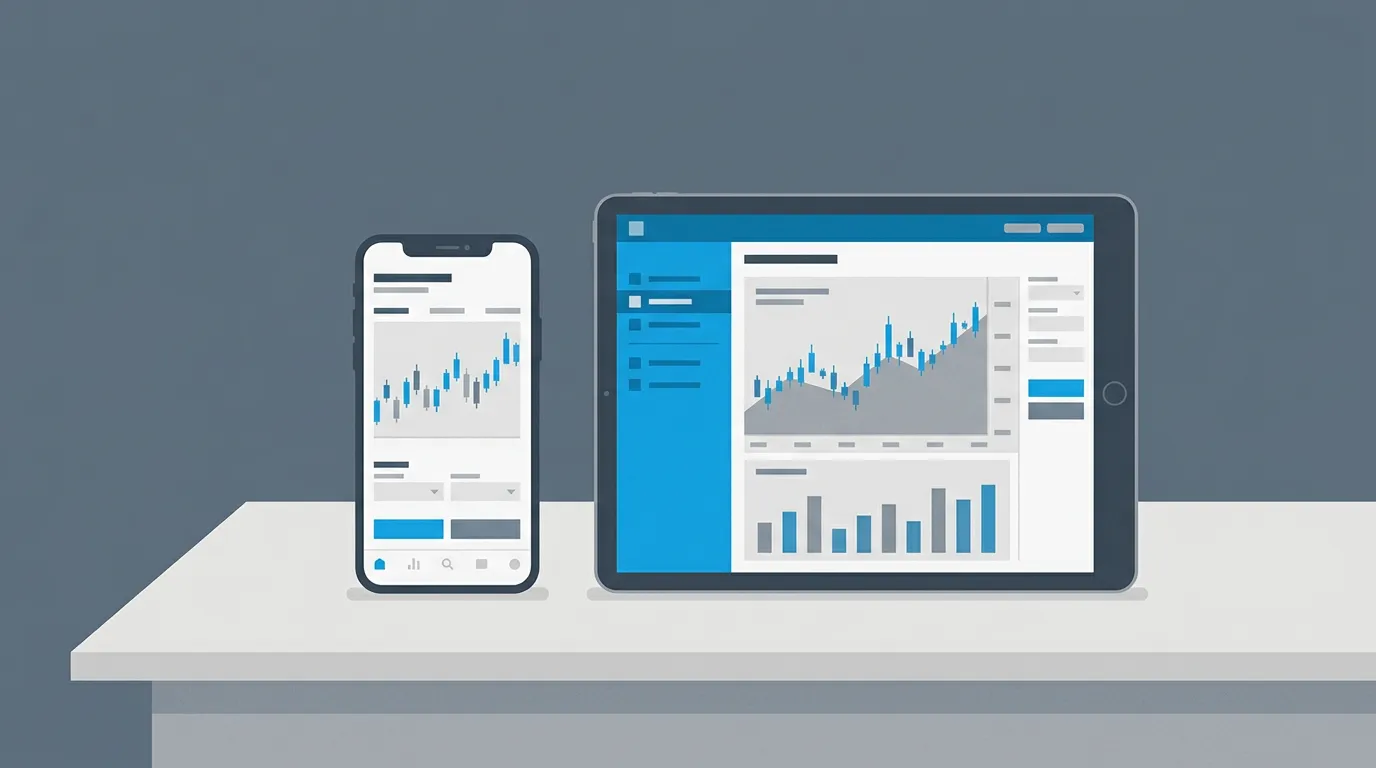
Honestly, using Libertex and eToro feels like visiting two completely different worlds. Both work well, but they're designed with different traders in mind.
Libertex's Platform
Libertex runs a clean, proprietary web trader and mobile app focused on CFD execution. The interface is straightforward: you search for an instrument, check the chart, set your position size and leverage, and execute. It's not flashy, but it's fast and functional. What stands out is the transparency of the cost display - you can see the commission amount before you confirm a trade, which is genuinely useful for active traders watching their costs. Libertex also supports MT4 and MT5 in some account configurations, which is a real bonus if you want to run automated strategies or use expert advisors.
eToro's Platform
eToro built its platform around social features first, trading tools second. The newsfeed, CopyTrader system, and Popular Investor profiles are front and center. For a beginner, this is actually brilliant - you can watch how experienced traders are positioning themselves, read their market commentary, and replicate their trades automatically with CopyTrader. The charting tools are decent but not as deep as dedicated trading platforms. You won't find advanced order routing or tick-by-tick data here.
Mobile Experience
Both brokers have solid iOS and Android apps. eToro's mobile app integrates the social feed seamlessly, making it feel more like a financial social network than a traditional broker app. Libertex's app is more focused on execution and charting. For traders in markets where mobile is the primary device, both apps handle the basics well.
Neither broker currently offers TradingView integration as a standard feature, which is worth knowing if you rely on that tool heavily.
Key Features: Libertex vs eToro

Fees and Costs: Where the Real Difference Lives
This is the section that actually determines which broker saves you money. And the answer isn't straightforward - it depends entirely on how you trade.
Libertex's Commission Model
Libertex charges zero spreads and instead takes a small commission on each trade. On EUR/JPY and USD/CHF, that commission starts from just 0.006%. For gold CFDs, the effective spread equivalent is around 25 pips. This model is genuinely transparent - you know exactly what you're paying before you click confirm. For active traders who open and close positions frequently, this structure tends to be cheaper than spread-based pricing over time.
The catch? Libertex charges an inactivity fee of €10 per month after 180 days of no trading activity. Withdrawal fees can also reach 1-2% depending on the method, which is higher than eToro's flat fee structure.
eToro's Spread-Based Model
eToro makes most of its money through spreads rather than commissions. The EUR/USD spread starts at 1 pip (vs Libertex's 0-1.2 pips dynamic range), and gold starts at 45 pips vs Libertex's 25 pips. For real stocks and ETFs, eToro charges zero commission, which is a genuine advantage if you're buying and holding shares.
eToro's withdrawal fee is a flat $5, which is actually quite reasonable for smaller withdrawals. But eToro accounts are USD-denominated only, meaning non-USD deposits trigger a currency conversion fee. If you're depositing in GBP, EUR, or another currency, factor that cost in.
Quick Cost Comparison
- Active CFD trading: Libertex wins on most instruments due to zero spreads and low commissions
- Gold and commodity CFDs: Libertex's 25-pip gold spread beats eToro's 45 pips significantly
- Real stock investing: eToro wins with zero-commission stock ownership
- Inactivity: eToro is more forgiving (12 months vs Libertex's 6 months before fees kick in)
- Withdrawals: eToro's $5 flat fee is more predictable; Libertex's 1-2% can sting on larger amounts
The bottom line for the eToro vs Libertex comparison on fees: if you're actively trading CFDs, Libertex is almost certainly cheaper. If you're a casual investor who buys stocks and checks in monthly, eToro's model works out better.
Libertex: Pros and Cons
Pros
- Zero spreads on all markets with transparent commission pricing
- Tight gold spread at 25 pips vs eToro's 45 pips
- MT4 and MT5 support for algorithmic traders
- Operating since 1997 with strong track record
- Supports multiple account currencies (EUR, GBP, PLN, CHF)
- No deposit fees and accepts Skrill, bank transfer, cards
- Good beginner educational resources
- Unlimited demo account covering 250+ CFDs
Cons
- CFD-only broker - no real stock or ETF ownership
- Fewer regulatory licenses than eToro (CySEC only as primary)
- Inactivity fee kicks in after just 180 days
- Withdrawal fees up to 1-2% can be costly on larger amounts
- No copy trading or social features
- Smaller asset universe (374 instruments vs eToro's 4,245)
- No US client access
eToro: Pros and Cons
Pros
- Industry-leading CopyTrader feature for social and copy trading
- Regulated by FCA, CySEC, ASIC, and SEC - strong global coverage
- Real stock and ETF ownership with zero commission on 2,000+ assets
- Largest asset selection at 4,245 instruments
- Lower minimum deposit at $50
- Accepts PayPal in addition to cards, bank transfer, and Skrill
- 12-month grace period before inactivity fee applies
- Accepts US clients - rare among global CFD brokers
Cons
- Higher spreads on CFDs - gold at 45 pips vs Libertex's 25 pips
- USD-only account currency means conversion fees for non-USD deposits
- No MT4 or MT5 support
- $5 withdrawal fee on every withdrawal
- Charting tools less advanced than dedicated trading platforms
- SP500 spread at 75 pips can add up for index day traders
- Social feed can feel distracting for execution-focused traders
Our Verdict: Libertex vs eToro 2026
Both brokers are solid, regulated, and beginner-accessible - but they serve genuinely different trader profiles. Libertex wins on cost efficiency for active CFD trading, while eToro wins on breadth, regulation, and social features.
Choose Libertex if you plan to actively trade CFDs on forex, gold, oil, or indices and want the lowest possible trading costs with transparent commission pricing. Choose eToro if you want to copy experienced traders, invest in real stocks, or prefer the security of multi-jurisdictional regulation including FCA and ASIC oversight. For beginners who are still figuring out their style, eToro's $50 minimum and CopyTrader feature make it the lower-risk starting point. For beginners who know they want to trade CFDs and want to keep costs tight from day one, Libertex is the smarter pick.
Try Libertex FreeSources and References
- [1] eToro vs Libertex Broker Comparison - InvestFox (Accessed: Jan 15, 2026)
- [2] Libertex vs eToro: Full Comparison Review - The Trading Bible (Accessed: Jan 15, 2026)
- [3] Libertex vs eToro for Latin American Traders - Best Brokers LatAm (Accessed: Jan 15, 2026)
- [4] Libertex Broker Review and Fee Analysis - Forex Crunch (Accessed: Jan 15, 2026)
- [5] Top Broker Comparison Tool - Libertex Profile - TopBrokers.com (Accessed: Jan 15, 2026)
- [6] CySEC Licensed Investment Firms Register - Cyprus Securities and Exchange Commission (Accessed: Jan 15, 2026)
- [7] FCA Financial Services Register - Financial Conduct Authority (Accessed: Jan 15, 2026)
Libertex vs eToro: Frequently Asked Questions
Is Libertex or eToro better for beginners in 2026?
What is the main difference between Libertex and eToro's fee structures?
Does Libertex offer copy trading like eToro?
Which broker has better regulation, Libertex or eToro?
Can I trade gold and oil on both Libertex and eToro?
What is the minimum deposit for Libertex and eToro?
Does eToro or Libertex support MetaTrader 4 or MetaTrader 5?
Which broker is better for trading indices like the S&P 500?
Ready to Start Trading with Libertex?
Open a free demo account with $50,000 in virtual funds and test Libertex's zero-spread CFD trading with no risk. Upgrade to live trading with just $100 when you're ready.